
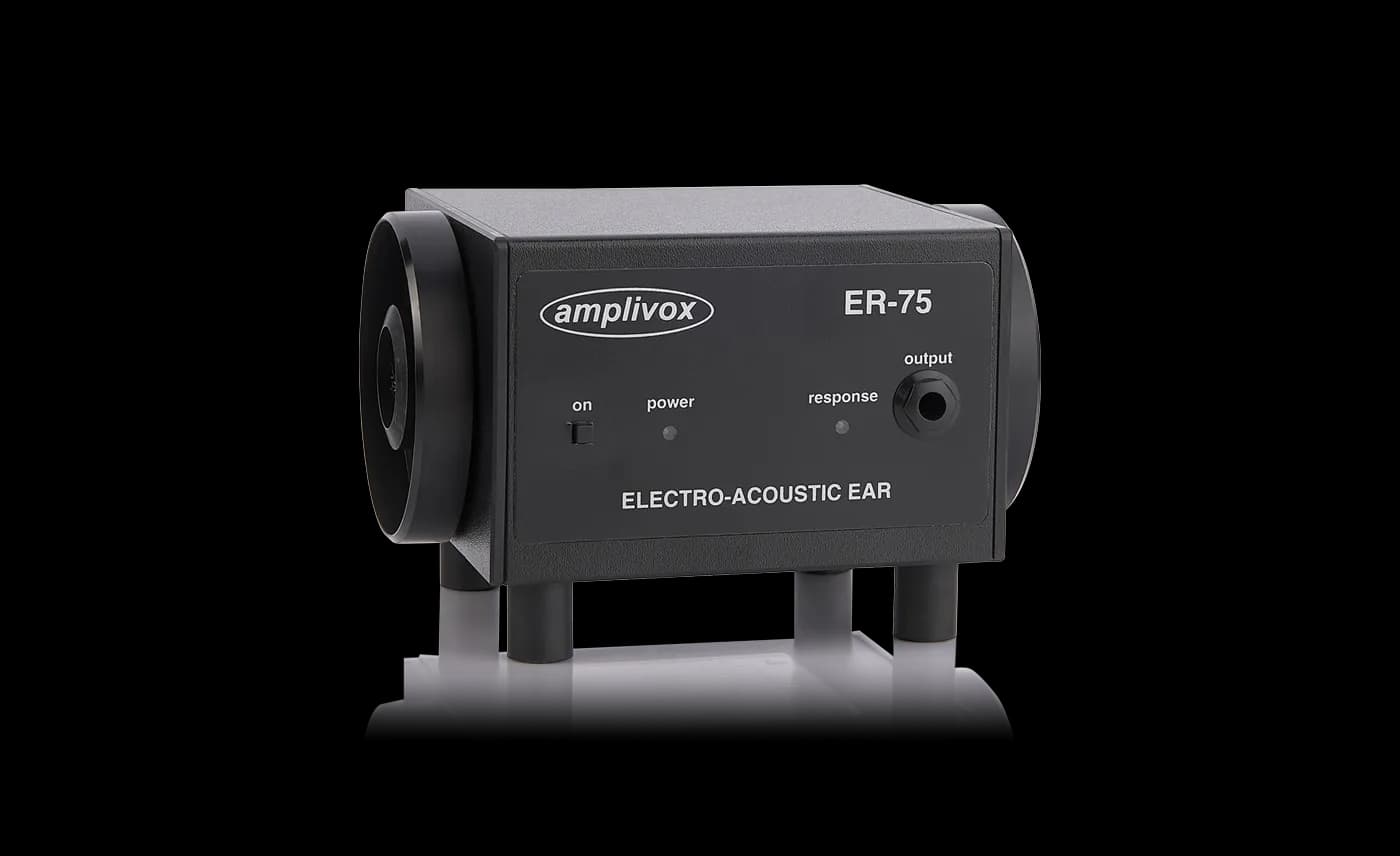
ER-75
–
ER-75
Electro-acoustic ear simulator
The ER-75 electro-acoustic ear simulator is the perfect solution for performing objective validation of audiometers and audiometric equipment, ensuring optimum performance when testing for hearing loss.
At only 500g (1.1lbs), battery powered and with a lightweight and compact design, the ER-75 can be used for both static and mobile requirements.
Please note: The ER-75 does not support the DD65v2 headset.
Fast and efficient
Instrument validation can be completed in under 5 minutes. This allows users to check if the audiometer, booth, headset, and all related cables are working accurately. Changes in measurements can be found by comparing them with earlier results. Users can then take the appropriate steps to ensure test accuracy.
Testing
Tests provide repeatable thresholds over the frequency range of 0.25kHz to 8kHz, thereby simulating the patient response and enabling the user to identify hearing loss issues. This ensures compliance at all hearing test frequencies used in an actual hearing assessment.
Automatic
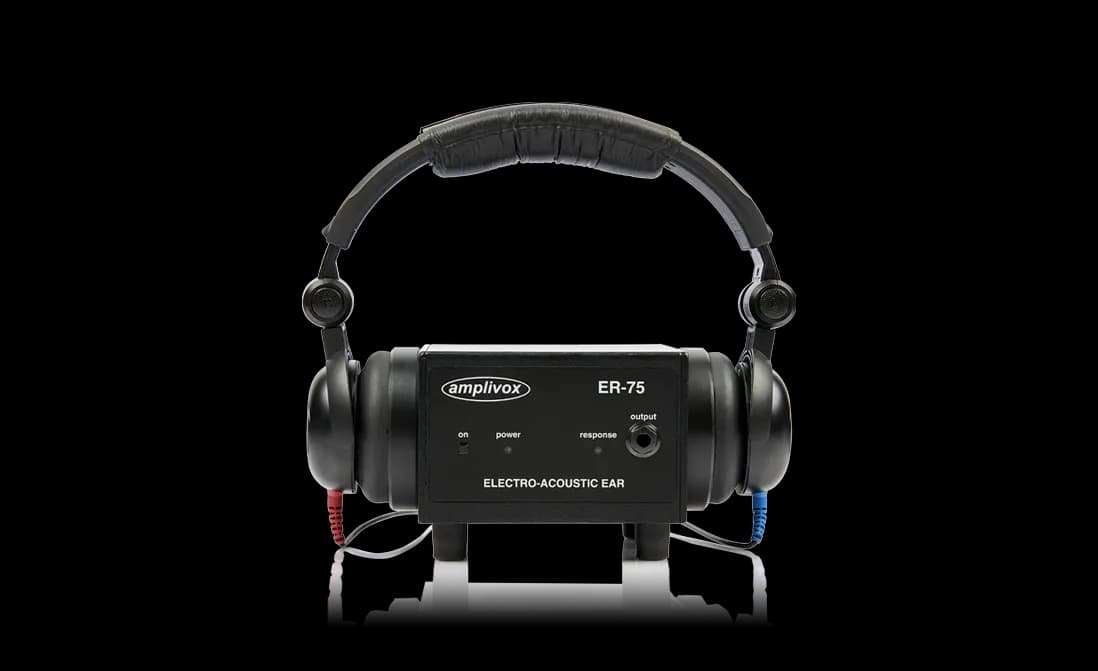
As the simulator is fully automatic, validations use a standard AC headset or Audiocups connected to the audiometer. These are placed over the ER-75’s built-in microphones.
Please note: Image shows ER-75 with a standard audiometric headset.
Request more information
Frequently asked questions
An electro-acoustic ear simulator is designed to replicate the acoustic impedance and reference characteristics of a normal adult ear canal.
When connected to an audiometer, the device simulates a normal air-conduction hearing threshold in dB HL. This lets clinicians or technicians run an automated pure-tone test, as if they were testing a patient with normal hearing.
This ensures hearing test equipment produces consistent, accurate, and repeatable thresholds between 250Hz and 8000Hz.
The primary benefit of this device is objective verification. While an ear simulator is not a replacement for comprehensive electroacoustic calibration or biological checks, it serves as an efficient and reliable verification tool. This ensures ongoing accuracy and clinical confidence in audiometric testing equipment.
If hearing screening results differ from a normal simulated audiogram, it may indicate output drift. It may also indicate frequency errors, distortion, or transducer problems. In such cases, clinicians should conduct further investigations and formally re-calibrate before they continue clinical testing.
We recommend performing an audiometer calibration validation on a routine basis to verify that output levels and frequencies remain accurate. In most clinical settings, clinicians should perform a daily check. Additional checks are recommended whenever the audiometer is moved, repaired, or suspected of inaccuracy.
An electro-acoustic ear simulator is a valuable verification tool, but it has important limitations. The simulator reflects an average adult ear canal impedance and may not match all ears. It does not include differences in ear canal size or curvature. It also does not account for cerumen, paediatric ears, or individual middle-ear conditions. Therefore, its measurements may not perfectly match a real patient’s experience.
It also measures acoustic output in controlled conditions and does not account for patient perception. It also doesn’t account for bone conduction, headphone position, or fit issues. Small changes in insertion depth or seal can significantly affect high-frequency results, which the simulator cannot correct.
Finally, it is a verification tool - not a replacement for full calibration or clinical judgment. While it can confirm that the audiometer output stays within tolerance, you still need a full yearly calibration. The American National Standards Institute (ANSI) recommends this. Routine biological checks also remain essential for accurate clinical testing.