

The future of occupational health screening
The future of occupational health screening is shifting from reactive, periodic check-ups to proactive, data-informed approaches. These approaches create personalised and preventative health experiences for employees.
What was once just about compliance is becoming a broader organisational priority, blending data, technology, and human expertise. This approach helps to detect risk earlier and prevent health issues before they occur. Improving overall outcomes - with hearing health being high on the agenda.1
Driven by new technology, changing work styles (remote or hybrid), and more focus on wellbeing, the industry is shifting. Organisations are now adopting a model that combines data analytics (physical, mental, and environmental). However, regions and regulatory frameworks implement this to significantly different extents.
“Organisations that fail to move toward preventive, risk-based approaches risk being outpaced by those that are more predictive and data-driven” says Joy Monaghan, Amplivox International Sales Manager.
The turning point
The COVID-19 pandemic increased both the complexity and demands of the profession. While also creating a unique opportunity for a renewed focus on workplace health.2
Globally, a growing number of governments and industry bodies are recognising that investment in occupational health supports retention, productivity and workforce participation.3 However, in practice, the level of investment and adoption varies widely between countries and industries.
More emphasis is now placed on keeping people healthy and in work, rather than focusing solely on compliance. For hearing screening, some programmes are shifting from check-box testing to broader health strategies. However, in many regulated settings, compliance-driven models still dominate.
Technological transformation
In the coming years, technology is expected to play a growing role in occupational health delivery. While some markets like the US are constrained by regulatory requirements, others such as Europe are advocating for a more holistic and preventive approach.
From wearable devices that track workers’ physical health to AI-powered analytics that predict hazards, organisations are embracing technology. It helps them prioritise and automate safety measures like never before.
However, it’s important to act with caution, not blind adoption, as not all technology can deliver real transformation.
Data integration and risk-based screening
Data integration allows for a more comprehensive evaluation of employee health and exposure data. By keeping all employee health data together for in-depth analyzing and supporting targeted, risk-based screening strategies. By considering exposure history, job role, age, and health trends, organisations can reduce unnecessary testing and improve outcomes.
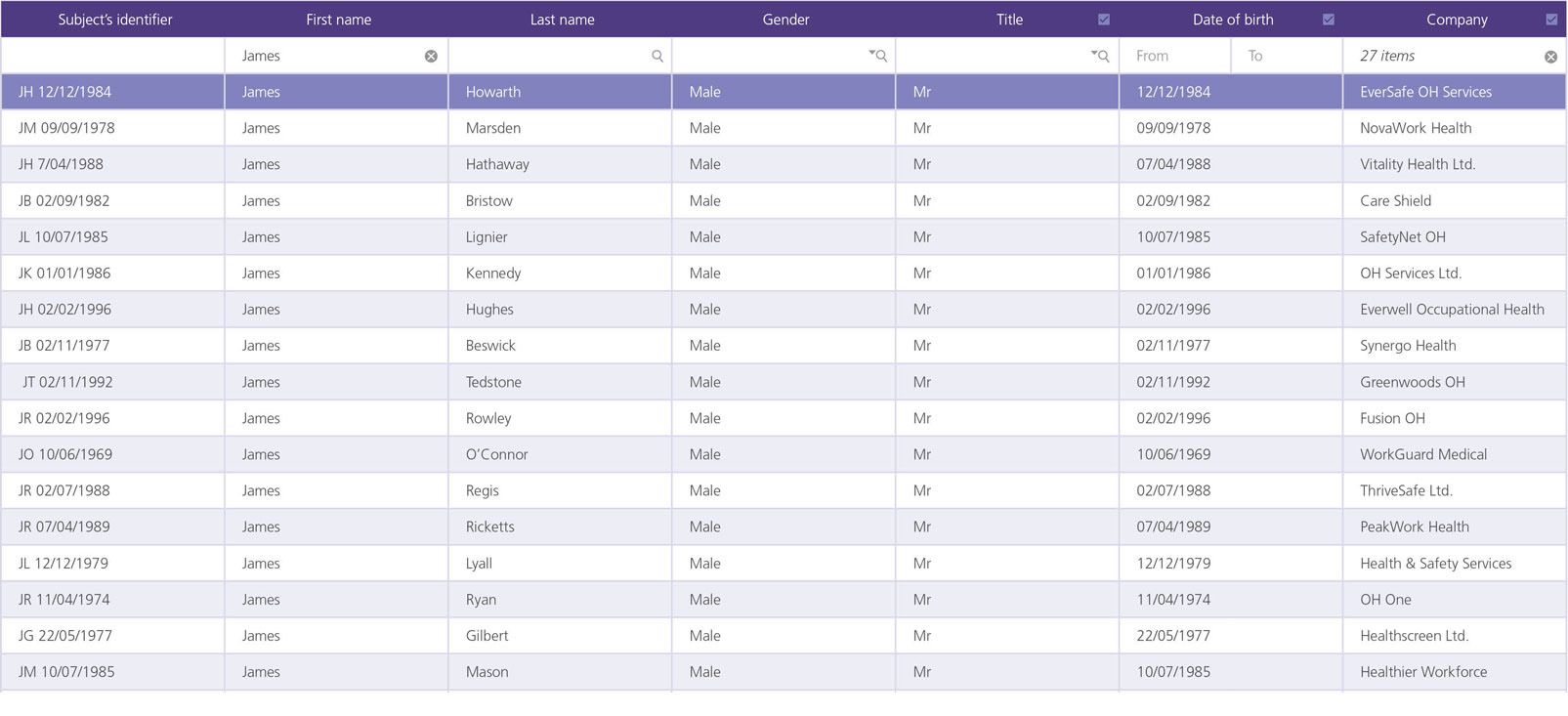
Figure 1: Example of an occupational health subject database, Amplivox, 2026
However, in regulated programmes like those governed by the Occupational Safety and Health Administration (OSHA), audiometric testing requirements are set. This limits the ability to apply true risk-based screening models in practice. Concerns around privacy, data ownership, and governance also remain significant barriers to widespread adoption.
Cloud-based records management
The increase in cloud-based solutions allows data to be accessed remotely. This allows for faster access to records and improved collaboration. However, they introduce additional considerations around cybersecurity, data governance, and reliance on stable connectivity, which might not be consistent across all environments.
Smartphone use
Free self-test mobile phone and web-based hearing tools are also becoming more accessible. These platforms encourage workers to check their hearing independently, without direct involvement from an occupational health professional. Reputable apps include the World Health Organizations’ hearWHO and the Mimi Hearing Test App.4/5
Even where manufacturers claim conformance, these tools are typically not ANSI/ISO-calibrated and don’t meet regulatory requirements. This limits their clinical and regulatory applicability. As a result, while useful for awareness and early indication, they should not be framed as a valid substitute for occupational screening tools.
Ambient noise management (booth vs non-booth testing)
Advances in technology have made it possible to conduct audiometric testing outside traditional sound booths. Some high-attenuation headsets are designed to greatly reduce environmental noise. This can support testing in places where traditional booths aren’t practical.
However, without continuous monitoring and validated environmental control, there’s limited objective evidence that these testing conditions remain within acceptable limits throughout the test. Additionally, testing outside a booth increases the risk of distraction, such as visual stimuli and background noise. These distractions may reduce focus and affect test reliability in unknown ways.
In the US, OSHA guidance indicates that when testing outside a booth, more restrictive Maximum Permissible Ambient Noise Levels (MPANLs) must be applied. As a result, booth-based audiometry remains the gold standard. It also required for legal compliance in many jurisdictions.
Non-booth testing should therefore by typically used as part of a hybrid approach, supporting access and screening, with confirmation conducted under controlled conditions.
Tablet-based testing
Tablet-based testing systems are increasingly used in hearing conservation programmes as they can offer greater flexibility, portability and workflow efficiency. The value of tablet-testing also extends beyond equipment costs. Traditional clinic-based models often result in loss of productivity from employees travelling to test sites, navigating large facilities, and waiting for appointments.
By offering tests at work, tablet-based testing reduces disruption. It also cuts downtime and helps organisations support hearing health in the workplace.
However, on closer examination, the benefits of these portable options often come from specific setups. These include higher attenuation headsets, not the tablet platform itself. And portability alone is not unique to tablets; standalone battery-powered audiometers can provide the same benefits. Regulatory acceptance has also historically been limited, particularly around:
- Battery-powered systems
- Self-administered testing
- Lack of calibrated environmental controls
In practice, some tablet-based systems may rely on a built-in microphone, which is neither calibrated nor American National Standards Institute (ANSI) compliant. They might also depend on subjective daily checks from a human listener, whose hearing will inevitably vary. Both of these factors can reduce confidence in compliance and repeatability.
In summary, while tablet-based solutions can improve accessibility, organisations must carefully evaluate them against regulatory and clinical requirements before adoption.
AI diagnosis and predictive analytics
Machine learning models are now being developed and tested to predict the risk of occupational noise-induced hearing loss (ONIHL). They use routine health data and offer new insights for risk grouping.6 This uses electronic medical records to collate all relevant risk factors.
In addition, AI is being used to uncover hidden patterns. These metrics can help you decide where to focus noise control resources. But they do not replace testing the people that hearing conservation programs aim to protect.
To use a more common injury example, AI might find that goods-in staff often cut their fingers. This can show that they need safer box cutters. However, it doesn’t mean employees should stop reporting cuts. Nor does it account for cases where injury continues like cutting themselves on shelving.
Hearing loss is even more challenging, as it’s internal, gradual, and not easily observable. For that reason, annual individual screening remains essential regardless of advances in predictive analytics for detection.
Despite tremendous promise, organisations should exercise caution: if the underlying data is flawed, models may produce misleading risk profiles. Industry leadership emphasises that AI should be a decision support tool, not an automated arbiter of health outcomes.7
Enhanced assessment methods
Testing is increasingly focused on higher frequencies than the usual range (0.25 to 8 kHz). This focus is on frequencies from 8 kHz to 16 kHz. Research suggesting that this can detect Noise-Induced Hearing Loss (NIHL) earlier.8
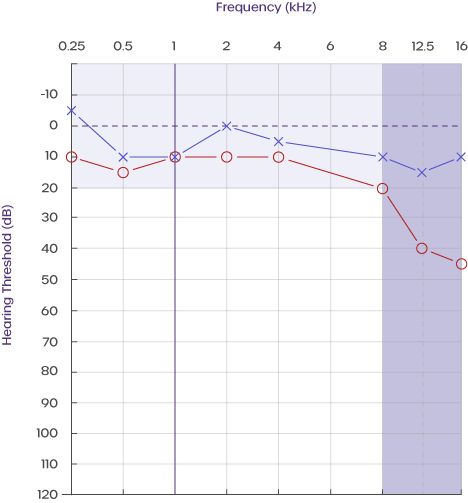
Figure 2: Adapted from "Audiogram with extended high frequencies
(12.5 and 16 kHz)", ENT & Audiology News, 2024
Figure 1 illustrates a conventional or standard audiogram (light shaded area) that is considered normal, with hearing thresholds ≤20 or 25 dB HL at frequencies 0.25 to 8 kHz.
However, when thresholds are measured at 12.5 and 16 kHz (dark shaded area), the blue curve stays normal, but the red curve drops sharply. Clinicians call this condition Extended High-Frequency (EHF) hearing loss, a type of subclinical or hidden hearing loss.
- Environmental sensitivity: high-frequency hearing is more sensitive to environmental acoustics, making reliable testing outside controlled environments more challenging.
- Equipment limitations: Most standard audiometers don’t support these frequencies without specialised equipment and updated standards.
Hearing Protector Fit Testing (HPFT)
Hearing Protector Fit Testing (HPFT) is also emerging as an important addition to modern hearing conservation programmes. While OSHA’s Occupational Noise Exposure standard does not require it, many see it as a best practice. HPFT measures the real-world attenuation provided by hearing protection devices. This helps workers understand proper fit and select options that are both effective and comfortable.
By improving correct use, HPFT can boost protection, while still allowing for essential communication and situational awareness in the workplace. This makes it practical and widely adopted in hearing conservation strategies.9
The future of NIHL detection is an ongoing area of discussion. Professional UK bodies such as the Society of Occupational Medicine (SOM), British Society of Audiology (BSA) and the Health and Safety Executive (HSE) are exploring how hearing assessment methods may need to evolve to better support early detection and prevention.
A shifting focus to prevention
Growing interest exists in finding NIHL early, before a Permanent Threshold Shift (PTS) occurs. This helps prevent irreversible hearing loss. However, preventive strategies must complement - not replace established surveillance requirements.
Employers are being more proactive in adopting new technologies such as high-frequency and Otoacoustic Emissions (OAE) testing. By combining early detection with strong employee engagement, hearing loss prevention can become a cultural priority. It won’t just be a box to tick for regulations.
Leveraging data, including an individual’s medical conditions and genetic factors, can also help to create more individualised and effective Hearing Conservation Programmes (HCPs).
Regulatory and social trends
Health and safety organisations like the HSE and OSHA stress the need for regular hearing tests. They also update compliance guidance to help keep workers safe.
While NIHL has historically been more prevalent in men, changing workforce demographics are creating a notable shift. Occupational noise exposure is increasing among female workers, particularly in high-middle Socio-demographic Index (SDI) regions…10
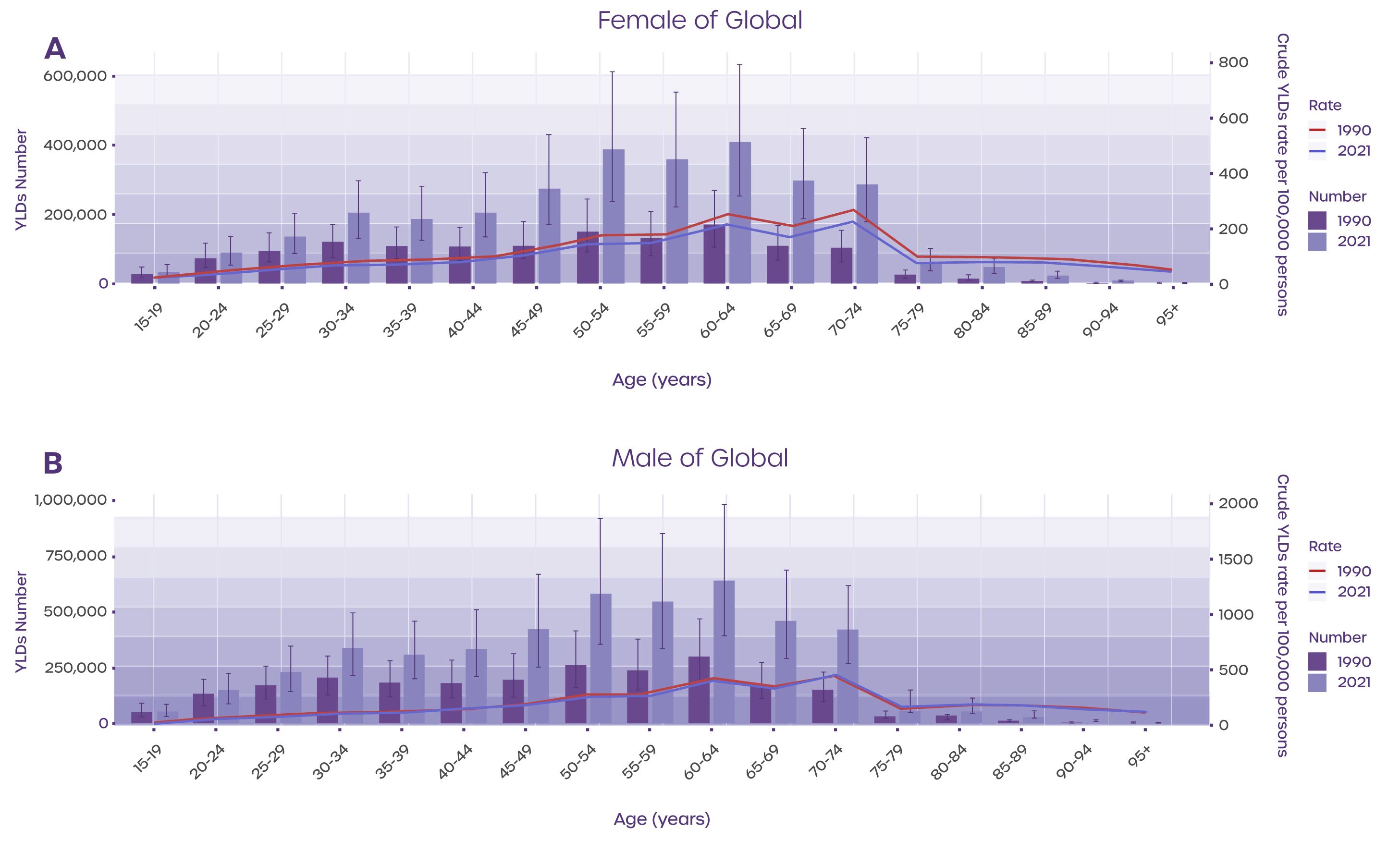
Figure 3: Adapted from "ONIHL burden across different ages and genders [(A) Female, (B) Male].
ONIHL, Occupational Noise-Induced Hearing Loss", NLM, 2025
This change is driven by greater participation in traditionally noise-intensive sectors, as well as exposure in emerging industries where regulation may be less established. This trend highlights the need for more inclusive, gender-responsive hearing conservation strategies.
At the same time, broader workforce changes are reshaping how organisations manage occupational health risks. An ageing workforce may be more vulnerable to hearing loss and other chronic conditions. While remote and hybrid working reduces day-to-day risk exposure.
Together, these changes show the need for more flexible, preventative, and individualised occupational health approaches. These should go beyond traditional workplaces and standard models of care.
The future of occupational health
The future of occupational health is likely to involve greater use of data and technology to be more preventative, but within the constraints of regulatory frameworks. However, technology alone is not enough. Organisations that succeed will be those that couple digital tools with thoughtful deployment, employee trust, and clinical judgement. AI and predictive analytics should support expert professionals, not replace them.
An underestimated challenge over the next five years is the structural shift in where and how work happens. Remote and hybrid models require employers to rethink risk assessment and integrate wellness and hearing conservation into dispersed workplaces.
Organisations can create safer, healthier, and more supportive work environments for everyone. By embracing preventive approaches and engaging workers as active partners in health.
Hearing screening solutions
As occupational health continues to shift from compliance-led surveillance to prevention-focused responsibility, hearing screening solutions must evolve accordingly. In practice, however, cost and regulatory compliance remain primary drivers of decision-making, particularly in highly regulated environments such as the US.
Amplivox’s approach focuses on delivering solutions that support both compliance, affordability and evolving programme needs, enabling consistent, high-quality screening across different environments.
By focusing on early risk identification, flexible delivery, and data-led insight, we support prevention over late diagnosis. By working closely with occupational health providers and employers, we help hearing conservation programmes fit today’s diverse workplaces, while maintaining clinical integrity.
This thinking underpins the development of our hearing screening and diagnostic audiometers.
Supporting the next generation of hearing conservation
By aligning technology with evolving policy expectations and real-world operational needs, we support employers in meeting their growing responsibility. Keeping people healthy, engaged, and in work. Helping to reduce and prevent hearing loss before it becomes permanent.
Our modelONE PC-based audiometer offers guided testing, high performance, and exceptional workflow efficiency for both specialists and non-audiologists. Enabling users to standardise processes and maintain a consistently high level of screening.
For greater flexibility, our AnovaTM screening audiometer offers a fully customisable testing experience, including manual and automatic testing. Combining innovation, accuracy, and ease of use, it is ideal for professionals who need flexible, reliable testing.
Both devices are perfectly suited to mobile screening and incorporate ambient noise monitoring technology. This lets users work from different locations and monitor the test environment in real time. It builds confidence in the quality and reliability of the results.
We also supply our devices with our state-of-the-art audiometry and data management software, Amplisuite. The software provides a wealth of tools for an enhanced and supportive test process. This includes hearing categorisation, data management, along with a >10dB shift indicator.
For more information about our hearing screening and diagnostic audiometers, visit our audiometers webpage. Or contact our customer support team on +44 (0)1698 208216 or email.