
Identifying age related hearing loss (Presbycusis)
What is Presbycusis?
As people get older, age related hearing loss (or presbycusis) may gradually affect their hearing. Essentially, it’s the slow decline of high-pitched hearing in both ears and one of the most common conditions with ageing. It affects about one in three people ages 65–74 and nearly half of those 75 and older.1
Hearing problems are common in older adults and are most commonly the result of the natural ageing process. But other factors, like work conditions, past activities, and health problems, can affect hearing as people age. For instance, a person’s previous social life can impact their hearing in the future.2
Age related hearing loss usually has an equal affect on both ears. However, people with presbycusis may not notice their hearing loss because it happens slowly over time.
Common causes of hearing loss with old age
As we get older, our hearing might naturally deteriorate. Experts believe that various factors (not just ageing) can impact hearing loss. This includes:
- Genetics
- Long-term exposure to loud noises
- Medical conditions such as diabetes, cardiovascular disease and high blood pressure
Complex changes in the nerve pathways from the ear to the brain can worsen hearing loss. As can abnormalities in the middle ear (however these are less common).
Certain drugs, such as those used for chemotherapy can also be harmful to the sensory cells in your ears, which can also lead to hearing loss.3
Symptoms of age related hearing loss
Presbycusis tends to occur within the highest frequency sounds first. This results in people having difficulty with certain tones, including:
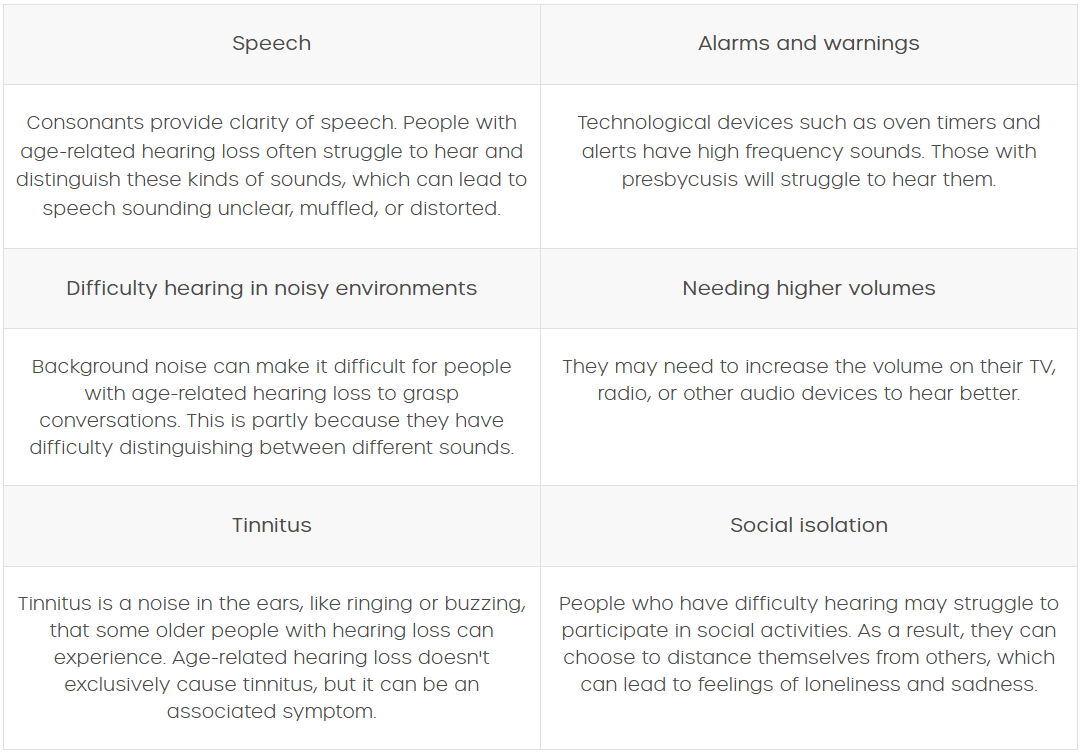
Remember that age-related hearing loss can vary from person to person and not everyone will have the same symptoms.
How is age related hearing loss treated?
Once an audiologist has identified and diagnosed a type of hearing loss, they can determine a suitable rehabilitation method. This will vary depending on the situation. An audiologist will talk about appropriate treatment options.
One possible method of rehabilitation is through the prescription of a hearing aid. The type of hearing aid can vary in output performance, size, style, and features. This will often depend on the nature and severity of the hearing loss.
In severe cases a cochlear implant might be required. For example, when hair cells are damaged or missing, or where sound isn’t able to properly reach the hearing nerve.
Industry-leading audiometers
Routinely assessing hearing function is important to identify any hearing loss. Hearing checks can take place in the community, at work, or by visiting a doctor or audiologist.
Our extensive range of dependable, PC-based screening audiometers provide a customised and flexible mobile or static screening solution. They also provide data management tailored to the user’s specific requirements, guaranteeing accurate and efficient testing.
Before choosing the correct treatment, it’s important to accurately diagnose the cause and type of hearing loss.
We’ve developed a suite of easy-to-use diagnostic audiometers. Our devices can perform a wide range of hearing loss tests including:
- Air and Bone Conduction (AC & BC)
- Special tests (ABLB, Stenger, SISI, Tone decay, HLS, and MHA)
- Speech tests
To learn more about our audiometers, you can visit our audiometers webpage. Or contact our customer support team on +44 (0)1698 208216 or via email.