How to keep your audiometry equipment clean
Medical devices like audiometers, which are used to assess hearing loss, often touch many people during the day, as different healthcare professionals pass them around. Thankfully, clinicians focus as much on keeping equipment clean as on operator and patient hygiene.
The questions this raises is whether to use disposable or reusable hygiene products to clean equipment. We believe there are pros and cons to both.
We know that many disposables aren’t environmentally friendly, even though they help the healthcare industry in many ways. But they certainly have their place when considering the need for high levels of personal hygiene and sanitation. An important thing to remember when reviewing the available options is to identify the level of infection control needed.
Hand hygiene tips
Hand hygiene plays a vital role in lowering the risk of cross-contamination amongst personnel handling the same audiometer. Soap and water are very effective at removing germs, bacteria1 and viruses2/3 if you wash your hands for a long enough period. However, regular handwashing with soap requires unlimited access to an un-spoilt water supply. In third world countries however this isn’t always possible.
Hand sanitisers can be a good alternative in environments where water isn’t easily accessible.1 Studies have shown that alcohol-based hand sanitisers deactivate enveloped viruses, including coronaviruses. However, as highlighted by Golin at al. sanitisers must “ensure complete hand coverage […] for appropriate hand care”.
Hand sanitisers are also a good alternative when on the move. However, a lot of solution is required to provide effective protection. Unfortunately this means an increase in the use of non-disposable materials.
Another downside is that soap or alcohol-based sanitiser can sometimes lead to sore hands or dry skin. In this instance, professionals can use gloves to keep their hands clean. However, it’s important to remember that most gloves come in large packs which are not sterile (unless specified).
They can also be used the wrong way. You might put them on too early. You might take them off too late. Or you might not change them as needed. So, if you choose to wear them, it’s important to keep track.
According to Simon Clarke, Associate Professor in Cellular Microbiology at the University of Reading:
“Gloves should only ever be worn to protect healthcare workers from blood, bodily fluids, or certain drugs.” 4
Operator hygiene tips
For product hygiene, we need to separate parts the operator touches from parts that contact the patient. Good hygiene procedures amongst audiometer operators are essential to remove contaminants.
The parts of an audiometer that have touched the operator should be cleaned with a soft cloth. Moisten the cloth with a mild solution of water and detergent. Hard cover surfaces can be cleaned with 70% isopropyl alcohol and a variety of non-alcohol-based cleaning wipes, which offer protection against several kinds of microorganisms.
If you prefer not to wipe the hard surface, use protective foils on the audiometer keyboard. You can easily replace them or wipe them with disinfectant.
Patient hygiene tips
General precautions should be followed to avoid cross-contamination from one patient to another. Clean the audiometer parts that touch the patient, such as headphones and response switches, after each use to remove earwax, dirt and moisture that may transfer during testing. This helps reduce the risk of patient colonisation, ear infection and other infectious diseases, while also helping to prevent the spread of contamination between patients.
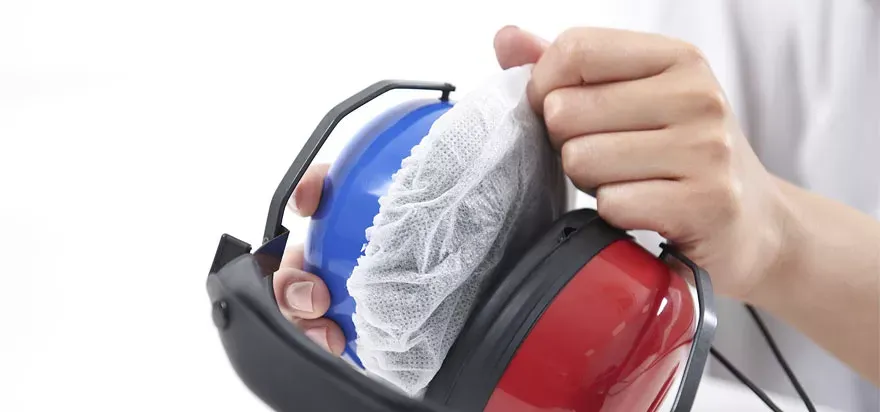
After each patient exam, use detergent and warm water, where appropriate, to wipe the relevant parts. If there is a high risk of contamination, use disinfectant instead. As well as the option of regular cleaning, disposable protective headphone covers for audiometric headphones can help maintain hygiene over the long term and minimise skin irritation caused by repeated contact with shared equipment.
To avoid cleaning the medical transducers, insert phones are also a good alternative. Placing disposable ear tips in the patient’s ear canal reduces contact between the accessory and the patient, which is especially useful when testing people with a suspected ear infection or visible skin irritation. Clipping the transducers to the patient’s clothing also reduces contact. Dispose of any parts that touch the patient after use to keep cross-contamination to a minimum.
How we can support you
Overall, disposables are easy to use, and they lower the probability of transmitting infection compared to reusables (which are a documented cause of cross-contamination if not cleaned appropriately). In an era of rising costs, morbidity, and mortality caused by healthcare-associated infections,5 using proven methods to reduce the spread of infection is paramount.
For more information about disposable hygiene consumables please contact our customer support team on +44 (0)1698 208216 or email.